
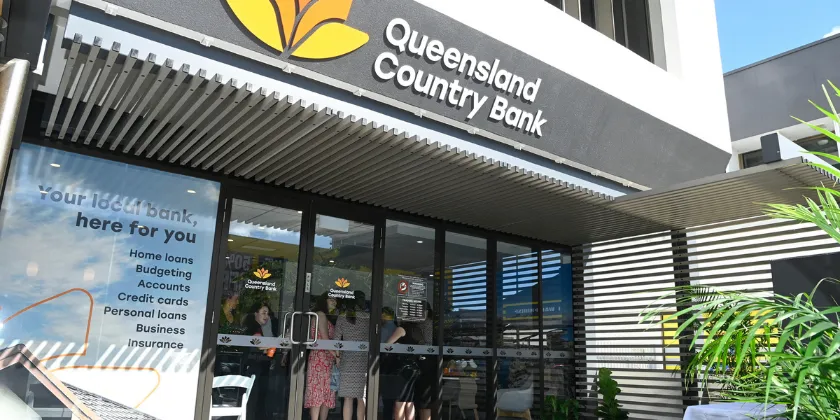
Ask someone in a regional town what their local branch means to them, and the answer usually goes well beyond banking.
We recently asked our Members what matters most to them through the Regional Banking Investment Alliance (RBIA) Regional Banking Insights survey. Thanks to everyone who had their say, the results show just how much regional Australians value face-to-face branches, not only as places to bank, but as local employers and a key part of their community's infrastructure.
What the survey told us
The results show a clear message from regional communities:
- 97 per cent rated local bank employment as essential or important.
- 95 per cent said the same of branches and shopfronts.
- 97 per cent valued banks helping keep decision-making local through participation in, and understanding of, the local economy.
- 91 per cent rated sponsorship and community programs as essential or important.
More than a place to bank
In written responses, people shared their concerns about branch closures: jobs leaving town, spending moving to larger centres and the growing burden of travelling for banking services.
One respondent reported driving 260 kilometres each way for personal banking services. Others pointed to fuel costs, time away from work and reliance on family or friends for transport, particularly for older people and people with a disability.
Many also spoke about the reassurance of having someone nearby when things go wrong. As one respondent put it, it's about "confidence for older Australians to not feel isolated when issues arise." Another raised concerns about AI replacing human interaction, trust and community connection.
Regional people are telling us that a branch is part of the infrastructure that makes their town work. – Aaron Newman, CEO, Queensland Country Bank
What this means for regional banking
Queensland Country Bank CEO Aaron Newman said these experiences should shape decisions about the future of regional banking.
"They value local jobs, local knowledge and a continuing relationship with people they trust," Mr Newman said. "Counting the number of over-the-counter transactions alone misses that wider contribution. We need to ask what happens to the community when the staff, the service and the reasons to visit the main street disappear."
RBIA has raised concerns that recent proposals from the Australian Banking Association for shared banking hubs could lead to an erosion of services and jobs. It believes any proposal should be assessed on its contribution to local employment, reliable access, privacy, local decision-making and ongoing community relationships, as well as the services available to customers.
The alliance is also again calling on the Federal Government to adopt its proposed Community Service Obligation, which would share the cost of sustaining full-service, face-to-face regional branches across the banking industry.
"Banks that earn revenue from regional Australia should contribute to the services that help those communities remain viable," Mr Newman said. "A lasting funding arrangement would give banks greater certainty to keep investing in local people and branches."
As a member-owned bank, we're proud to be part of the regional communities we serve, and we'll keep listening to what matters most to our Members and the towns they call home.
About RBIA and the Regional Banking Insights Survey
The Regional Banking Investment Alliance (RBIA) brings together regional banks and supporters, including Queensland Country Bank, advocating for a Community Service Obligation to sustain face-to-face banking services for Australians, no matter where they live.
The Regional Banking Insights survey received 1,555 responses through RBIA member banks in September and October 2026. Questions on local employment and physical banking infrastructure each received 1,329 responses.